AI-Generated Tapestry Design Example
This post documents a simple example of using AI to generate a sample image and supporting palette notes for a textile project. In this case, the reference was common mullein, with the design organized as seasonal colour bands for a tapestry.
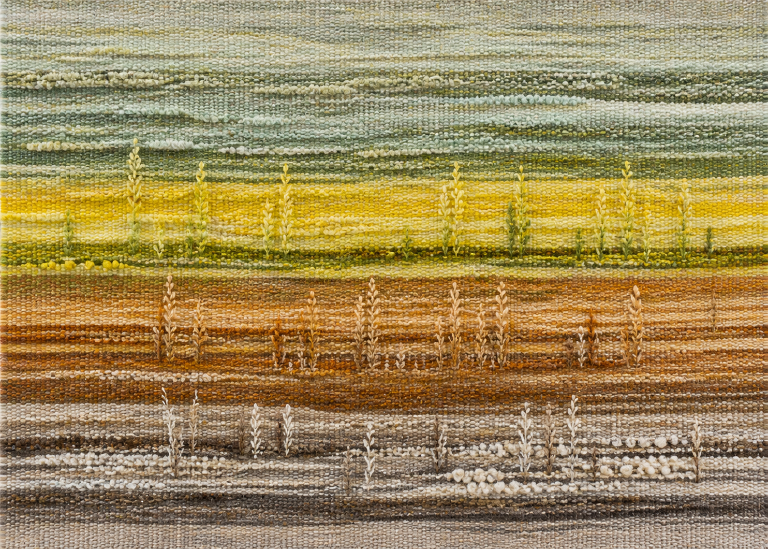
The sample was generated from a prompt along these lines: generate a tapestry concept for an Ashford large tapestry loom using stripes based on the colours of common mullein as the plant changes through spring, summer, fall, and winter.
Seasonal palette summary
| Season | Palette | Notes from the sheet |
|---|---|---|
| Spring | Velvet Rosette (#C7C9B5), Dusty Sage (#A9B09B), Pale Celadon (#D7DED1), Mullein Moss (#7F8B63), Leaf Shadow (#66725A) | Silvery leaf green, muted sage, cool soft green, mossed olive, deep grey-green |
| Summer | Flower Spike (#D5B419), Sunlit Ochre (#C9A33C), Chartreuse Stem (#A9A640), Olive Field (#6F7340), Warm Pollen (#E3D37A) | Mullein yellow, golden ochre, yellow-green, olive green, soft warm yellow |
| Fall | Dried Seedhead (#B88A4A), Straw Gold (#C29C64), Weathered Tan (#9C7755), Muted Rust (#8A5A39), Late Earth (#6D4E38) | Warm camel, dry straw, earthy tan, soft rust brown, deep soil brown |
| Winter | Ash Stem (#8C8177) | Stem grey-brown |
What the PDF adds
- The palette sheet presents the seasons in order: spring, summer, fall, winter.
- It treats these colours as example target tones rather than exact required matches.
- It notes that close substitutes are acceptable.
- It emphasizes that texture and value contrast matter as much as exact hue.
This is a practical use case for AI image generation: producing an early visual sample and an accompanying palette reference that can then be adjusted, substituted, or translated into real materials.